How to Become a Video Editor After 12th: A Practical Guide for Mumbai Students
Every Reel, ad, web series and film you watch passed through an editor’s hands. If you have just finished 12th and you love cutting videos on your phone, video editing can become a real career. You do not need a degree to start, but you do need the right skills, the right tools and proof that you can deliver.
This guide walks you through the path step by step, based on what we see every day training editors near Film City in Mumbai.
1. Understand what a video editor actually does
A video editor turns raw footage into a story. On a typical project you will:
- Organise and sync footage and audio
- Build the story in a rough cut, then tighten it to a final cut
- Add graphics, titles and basic visual effects
- Correct and grade colour so every shot matches
- Mix sound and export for TV, YouTube, Instagram or cinema
Editors work in post-production studios, ad agencies, TV channels, OTT platforms, YouTube and influencer teams, corporate video companies and wedding film studios. Many also freelance.
2. Learn the industry software, not just phone apps
Phone apps are a good start, but studios hire on professional tools. Focus on:
- Adobe Premiere Pro: the most widely used editing software in Indian agencies and YouTube teams
- Adobe After Effects: motion graphics, titles and compositing
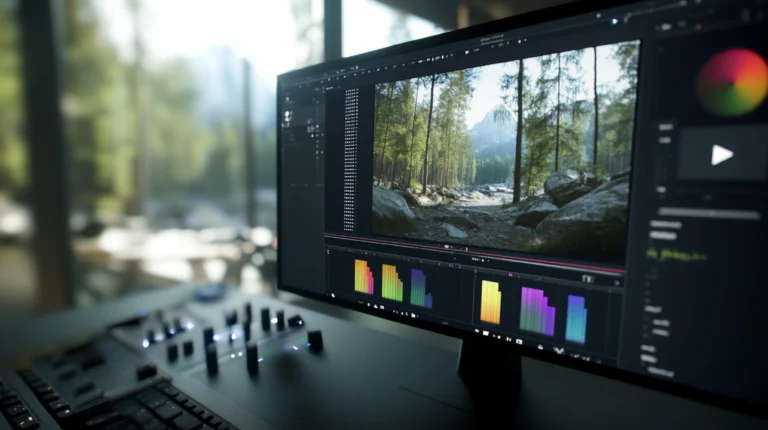
- DaVinci Resolve: editing and Hollywood-standard colour grading
- Adobe Photoshop and Illustrator: thumbnails, posters and graphics
- Autodesk Flame: high-end finishing for TV commercials, a niche skill with few trained artists
AI features inside these tools, such as auto-reframe, generative fill and AI masking, now save hours. Learning them early gives you an edge.
3. Choose the right course for your goal
After 12th you have three realistic routes:
| Your goal | Suitable course length | What you get |
|---|---|---|
| Start working fast as an editor | 4–6 months | Editing and graphics software, practical projects |
| Become a complete post-production artist | 1 year diploma | Editing, VFX, colour grading, motion graphics |
| Build a long-term post-production career | 2–2.5 year diploma | Advanced post, multiple specialisations, portfolio |
Whatever you choose, ask every institute three questions:
- Will I work on real footage from actual shoots, or only on sample clips?
- How many practice hours do I get on the machines?
- Who are the trainers, and what have they edited?
4. Practise on real projects
Software knowledge alone does not get you hired. Studios want to know you can handle messy, real-world footage under a deadline. Edit everything you can: college events, friends’ short films, local business ads, music covers. At CEMA, students cut raw footage from real ad films, music videos and corporate shoots so their first professional edit is not their first real project.
5. Build a showreel that gets interviews
Your showreel is your CV. Keep it to 60–90 seconds, put your best work in the first 10 seconds, and show range: a fast-paced promo, a story-driven piece and a colour-grade before/after. Upload it to YouTube or Vimeo and put the link at the top of every application.
6. Get your first job or freelance client
- Apply for assistant editor and junior editor roles at post houses and agencies
- Offer to edit for small YouTube creators and local businesses to build credits
- Visit studios and network; Mumbai’s industry runs on referrals
- Keep learning; editors who also grade colour or do motion graphics earn more
7. How long does it take?
Most dedicated students become job-ready in 6 to 12 months of focused, practical training followed by a strong showreel. The fastest learners are those who practise daily on real footage.
Start your editing career at CEMA
Cutting Edge Media Academy in Goregaon East, near Film City, trains students in video editing, VFX, colour grading, graphic design and cinematography. Courses are taught by industry professionals led by founder Rajat Diwan, an Adobe Certified and Blackmagic Design DaVinci Resolve Certified Trainer with 25+ years in film and ad post-production.
Book a free career counselling session: call or WhatsApp +91 98206 25866, see our 6-month video editing course or the one-year diploma in editing & VFX, or fill the enquiry form.
FAQs
Can I become a video editor without a degree?
Yes. Studios hire on skills and showreel. A professional course plus practical projects is the fastest route.
Which software should a beginner learn first?
Start with Adobe Premiere Pro, then add After Effects and DaVinci Resolve.
Is video editing a good career in India?
Demand for video keeps growing across YouTube, OTT, advertising and corporate communication, so skilled editors are needed in every one of these fields.